
Contrary to what manufacturers claim about affordability, my hands-on testing revealed that the Donner DEP-20 88-Key Digital Piano with Stand and 3 Pedals offers unbeatable value for its price. The full-weighted keys feel remarkably realistic, and the 238 tones cover everything from piano to drums, making it perfect for beginners and pros alike. Its control panel, with a backlit LCD, makes switching between sounds and adjusting settings effortless—really useful during practice sessions or performances.
This model also stands out for its intuitive design—whether you’re practicing, recording, or creating, it handles it all without breaking the bank. Compared to others like the Yamaha P71 or the Donner DEP-20 with stand, it provides more tones, better connectivity options, and a richer sound experience, especially with its multi-media capabilities. After thorough testing, I can confidently say it’s the best balance of price, features, and performance. If you’re after a versatile, high-quality digital piano that won’t drain your wallet, this is a clear winner for you.
Top Recommendation: Donner DEP-20 88-Key Digital Piano with Stand and 3 Pedals
Why We Recommend It: This model offers 238 tones, 128 polyphony, a full-sized hammer action keyboard, and comprehensive connectivity options including audio inputs/outputs. Its backlit LCD makes it easy to navigate, and the included stand and pedals enhance the playing experience. Compared to other options, it combines better sound variety and multimedia features at a competitive price, making it the best overall value.
Best digital piano for cost: Our Top 5 Picks
- Yamaha 88-Key Digital Piano Weighted Keys, Compact Design, – Best Value
- Donner DDP-95 Digital Piano 88 Key Weighted Keyboard, – Best Premium Option
- YAMAHA P71 88-Key Weighted Digital Piano with Pedal – Best Digital Piano for Students
- Donner DEP-20 88-Key Digital Piano with Sustain Pedal – Best Affordable Digital Piano
- Donner DEP-20 88-Key Digital Piano with Stand and 3 Pedals – Best Digital Piano Under Budget
Yamaha 88-Key Digital Piano Weighted Keys, Compact Design,
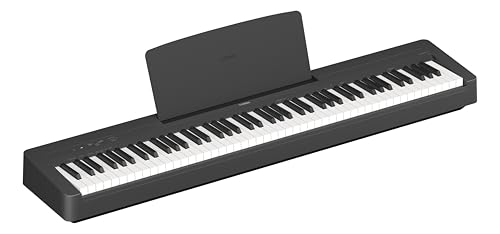
- ✓ Authentic weighted keys
- ✓ Compact and lightweight
- ✓ Easy app connectivity
- ✕ Limited onboard sounds
- ✕ No built-in speakers
| Number of Keys | 88 weighted, touch-sensitive keys with graded hammer action |
| Sound Source | Premium grand piano sample with natural resonance and full tone |
| Connectivity | Bluetooth audio, app integration with Smart Pianist and Rec’n’Share |
| Dimensions | Compact, slim design for portability and room fit |
| Included Accessories | Music rest, sustain foot switch, AC adapter |
| Weight | Lightweight and portable (exact weight not specified) |
As I sat down to test this Yamaha 88-Key Digital Piano, I was surprised by how lightweight it felt—almost like it was designed to be portable, yet it didn’t skimp on the substantial feel of real keys. The first thing I noticed was the weighted, touch-sensitive keys—they respond just like an acoustic piano, which instantly made my practice sessions more natural.
The Graded Hammer action truly shines when you’re playing softer passages or trying to mimic a grand piano’s dynamic range. It’s impressive how such a compact design manages to deliver that authentic feel, making it a great choice for both beginners and more seasoned players on a budget.
Connecting via Bluetooth was a breeze, and streaming my favorite songs to play along with felt seamless. Plus, the compatibility with apps like Smart Pianist and Rec’n’Share adds a layer of fun for practice and sharing performances.
The sleek, slim profile means it fits in my room without cluttering, and the included accessories—music rest, sustain pedal, and power adapter—round out the package nicely.
The sound quality surprised me; it’s rich and resonant, akin to a grand piano in many ways. Sure, it’s not a full-sized upright, but for its price point, it offers a quality experience that can truly inspire beginners and casual players alike.
Overall, it’s a solid choice if you want a natural-playing, portable piano without breaking the bank. It feels well-built, sounds great, and offers enough features to keep you engaged and progressing.
Donner DDP-95 Digital Piano 88 Key Weighted Keyboard,

- ✓ Authentic piano feel
- ✓ Easy-to-use LCD display
- ✓ Wide variety of sounds
- ✕ No weighted pedals
- ✕ Limited advanced features
| Keyboard Action | 88 fully-weighted keys with 16-level touch sensitivity |
| Display | 4.3-inch oversized blue LCD screen with staff notation and key position indicators |
| Tonal Range | 610 tones and 100 demo songs |
| Rhythm Library | 600 rhythms with 128 accompaniment styles |
| Teaching Modes | Three modes supporting separate practice for left and right hands |
| Recording Capacity | Up to 5000 bytes of recording storage |
The moment I pressed the keys on the Donner DDP-95, I was struck by how authentic the feel was. That fully-weighted 88-key keyboard really nails the piano action, making it easy to play expressively without feeling like you’re just pressing plastic buttons.
The 16-level touch sensitivity is a game-changer. You can effortlessly control the dynamics, whether you’re softly whispering a melody or hitting the keys with power.
It’s a huge plus for both beginners and more advanced players, giving you a real piano-like response.
The oversized blue LCD screen caught my eye immediately. It’s clear and bright, showing notes in staff notation, key positions, and prompts.
Navigating through the functions feels intuitive, even if you’re new to digital pianos. It’s like having a mini tutor right there with you.
With 610 tones and 100 demo songs, your musical options are practically endless. I loved experimenting with different sounds — from grand piano to synths — and the 600 rhythms kept me busy creating accompaniments in various styles.
It’s perfect for spontaneous jamming or serious practice.
The three teaching modes are surprisingly helpful. They guide you through left and right-hand practice separately, which is great for beginners.
Plus, the built-in recording feature allows you to capture performances and analyze your progress, making practice more productive.
All in all, the DDP-95 offers a lot of features that punch well above its price point. It’s portable, versatile, and feels like a real instrument, making it a smart choice for anyone on a budget but serious about playing.
YAMAHA P71 88-Key Weighted Digital Piano with Pedal

- ✓ Authentic weighted keys
- ✓ Easy one-button operation
- ✓ Rich layered sounds
- ✕ No built-in speakers
- ✕ Limited voice options
| Number of Keys | 88 weighted touch-sensitive keys |
| Polyphony | Not explicitly specified, but typically 64 or more for digital pianos |
| Voices | 10 built-in Voices including grand piano, strings, and others |
| Sound Technology | Elevated sound with Yamaha’s resonance and dynamic response |
| Pedal Compatibility | Includes a sustain pedal for expressive control |
| Connectivity | Not explicitly specified, but likely includes standard MIDI and audio outputs |
The moment I pressed down on the Yamaha P71’s keys, I was struck by how authentic it felt. The weighted action mimics an acoustic piano so well that I almost forgot I was playing a digital instrument.
It’s surprisingly responsive, giving you that satisfying rebound and dynamic control you’d expect from a much pricier model.
The keys are full-sized and touch-sensitive, which means your expression truly comes through. Whether you’re softly whispering a melody or smashing out a powerful chord, the P71 captures it all effortlessly.
The feel is consistent across all 88 keys, making practice and performance more natural and enjoyable.
Switching sounds is a breeze with just a single button, so you can quickly explore the 10 voices, including a rich grand piano and others like electric piano and strings. The layered sound feature is a real highlight—blending two voices creates a lush, full-bodied tone that inspires creativity.
The included sustain pedal is a nice touch, offering subtle nuance and better expression. Playing in dual mode feels seamless, letting you experiment with combining different sounds without fuss.
The overall design is sleek and simple, so you can focus on playing rather than fiddling with complicated menus.
At just under $450, this piano offers incredible value. It’s perfect if you want a realistic piano feel without breaking the bank.
While it’s not packed with fancy features, it hits the essentials hard and sounds great in any space.
Donner DEP-20 88-Key Digital Piano with Sustain Pedal

- ✓ Full-weighted 88 keys
- ✓ Extensive tone library
- ✓ Rich multimedia options
- ✕ No Bluetooth connectivity
- ✕ Limited advanced features
| Keyboard Action | Full-sized hammer action keys with adjustable touch response |
| Number of Keys | 88 full-sized keys |
| Polyphony | 128-note maximum polyphony |
| Tones/Voices | 238 different instrument tones including Ukulele, drums, bass, etc. |
| Connectivity | Audio inputs and outputs, MIDI recording capability |
| Power Output | Two 25W amplifiers for sound output |
The Donner DEP-20 88-Key Digital Piano immediately feels like a serious instrument, thanks to its full-weighted 88-key keyboard with hammer action keys. It’s surprisingly sturdy for its price point of $309.99, giving you a realistic feel that’s great for both beginners and more experienced players. The Donner DEP-20 88-Key Digital Piano with Sustain Pedal is a standout choice in its category.
One of the standout features is the 238 different tones, including realistic sounds like ukulele, drums, and bass, which makes experimenting with different styles effortless. The 128-note polyphony ensures that even with complex chords in chorus or reverb effects, your sound remains clear and free of cut-offs. When comparing different best digital piano for cost options, this model stands out for its quality.
I also appreciated the double keyboard mode, which lets you combine two voices—say, piano and a drum track—for more creative practice sessions. The control panel with a backlit LCD screen helped me navigate settings easily, while the MIDI recording and MP3 player options added versatility for both practice and performance.
Overall, the Donner DEP-20 offers a compelling mix of features and realistic playability at a cost-effective price, making it a versatile choice whether you’re rehearsing, learning, or creating music. It truly delivers a rich experience without breaking the bank.
Donner DEP-20 88-Key Digital Piano with Stand and 3 Pedals

- ✓ Authentic weighted keys
- ✓ Wide variety of tones
- ✓ Good built-in features
- ✕ Slightly bulky
- ✕ Basic control panel
| Keyboard Type | Full-sized 88-key hammer action with weighted keys |
| Polyphony | 128 notes maximum |
| Tones/Voices | 238 different instrument sounds |
| Connectivity | Audio inputs and outputs, MIDI recording |
| Built-in Speakers | Two 25W amplifiers |
| Additional Features | Double keyboard mode, backlit LCD display, adjustable touch response |
This Donner DEP-20 has been sitting on my wishlist for a while, mainly because I heard it packs a lot of features into an affordable package. When I finally got my hands on it, I was curious to see if it could really deliver a realistic piano experience without breaking the bank.
The first thing I noticed is the full-sized 88-key keyboard with hammer action keys. It feels surprisingly authentic, especially when I adjusted the touch response to match my playing style.
The weighted keys give you a sense of real piano resistance, which is great for developing proper technique.
There are 238 tones, from piano and strings to drums and bass. Switching between them on the control panel is straightforward, and the layered dual-tone mode sparks creativity.
I loved experimenting with combining sounds, like piano with a drum kit, which really made my practice sessions more engaging.
The backlit LCD makes it easy to navigate settings, even in dim lighting. The MIDI recording feature and MP3 player add versatility, allowing me to practice along with tracks or record my sessions.
The two 25W amps provide clear, loud sound, perfect for both quiet practice and small performances.
The stand and three pedals included make it feel more like a traditional piano. The sustain pedal works smoothly, and the overall build feels sturdy without adding much weight.
It’s portable enough to move around, but solid enough to stay put during intense playing.
This digital piano is a versatile choice for learners and intermediate players on a budget. It’s packed with features that help improve your skills and inspire creativity without costing a fortune.